
T1D Facts

image description

T1D Facts

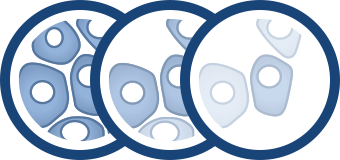
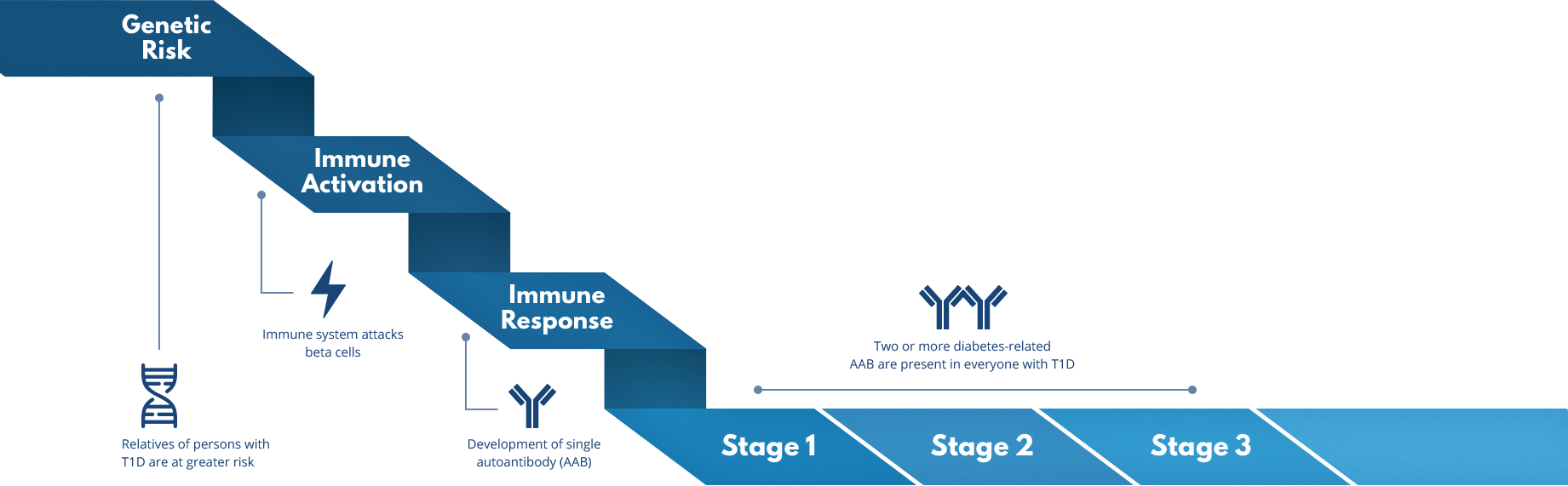
Type 1 diabetes (T1D) is a disease of the immune system that progresses in three stages. In people with T1D, the immune system mistakenly attacks healthy insulin producing cells, called beta cells, and destroys them.

image description

image description Genetic Risk

T1D starts with genetic risk—genes that put you at higher risk for the disease.

T1D starts with a genetic predisposition. The risk for people in the general population is about 1 in 300. However, if you have a family member living with T1D, your risk increases to 1 in 20.

Back to Top
image description

Know your risk

TrialNet Risk Screening

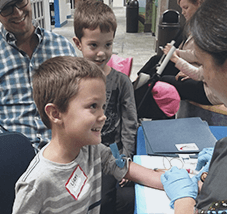
If you have a relative with T1D, you’re in a unique position to help advance important research. TrialNet risk screening through the Pathway to Prevention Study detects the risk of developing T1D years before symptoms appear. Learn more


image description
image description

Autoantibodies

Antibodies are proteins that protect your body against things like infection. People develop T1D when their body begins to produce antibodies that mistakenly attack healthy proteins—known as an autoantibody.

image description Immune Activation

The role of autoantibodies in the development of T1D.

During the sequence of immune activation and response, the immune system mistakenly attacks cells in the pancreas. This can lead to the development of an diabetes-related autoantibody. Individuals who develop two or more of these diabetes-related autoantibodies will develop type 1 diabetes in their lifetime.

Back to Top
image description

research opportunities

TrialNet Prevention Studies

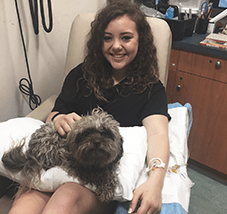
TrialNet offers clinical studies for screening participants determined to be in the early stages of T1D. Prevention studies explore ways to slow or stop disease progression by preserving insulin production. Learn more

image description
image description

Beta Cells

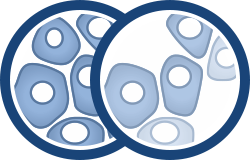
Beta cells, located in the islets of the pancreas, are cells that produce insulin. Insulin moves blood sugar into body tissues. Beta cells work together to create insulin and balance sugar in the blood.

image description Stage 1

T1D progresses in three stages. Stage 1 is the start of type 1 diabetes.

Individuals in stage 1 of T1D test positive for two or more diabetes-related autoantibodies, identified by TrialNet T1D risk screening. In stage 1, the immune system has started attacking insulin-producing beta cells. Blood sugar levels remain normal and no symptoms are present.

Back to Top
image description
image description

Rate of Progression

Research shows that age plays an key role in the speed of progression. Younger children progress faster than teens and adults. An adult can take years to advance from stage 1 to stage 2, yet a very young child might progress in months.

image description Stage 2

T1D progresses in three stages. Stage 1 is the start of type 1 diabetes.

Individuals in stage 1 of T1D test positive for two or more diabetes-related autoantibodies, identified by TrialNet T1D risk screening. In stage 1, the immune system has started attacking insulin-producing beta cells. Blood sugar levels remain normal and no symptoms are present.

Back to Top
image description
image description

Diabetic Ketoacidosis

Diabetic ketoacidosis (DKA), is a life-threatening condition that can occur in people during stage 3 of T1D. DKA occurs when there is a shortage of insulin. The body begins to burn fatty acids and produce ketone bodies that cause symptoms and complications.

image description Stage 3

Stage 3 was formerly thought to be the start of type 1 diabetes.

In stage 3, T1D symptoms are present due to significant beta cell loss. For many individuals, stage 3 is detected by clinical diagnosis. Common symptoms include increase thirst and urination, unexplained weight loss, blurred vision, and lethargy. For some, diagnosis may result from an episode of life-threatening diabetic ketoacidosis (DKA).

Back to Top
image description

research opportunities

Studies for Newly Diagnosed T1D

If you have a family member newly diagnosed with T1D, Trial can help. TrialNet research studies include therapies for newly diagnosed individuals testing ways to preserve insulin after clinical diagnosis (stage 3). Learn more

Facts about T1D

Lorem ipsum dolor sit amet, consectetur es type 1 diabetes. Still have questions about T1D? Visit our FAQs.

Lorem ipsum dolor sit amet, consectetur adipisicing elit. Molestiae voluptates ex rem dolor, beatae minus voluptatibus maiores perspiciatis nobis facilis quos nisi cum culpa, placeat ipsum in repudiandae nesciunt sunt.

Lorem ipsum dolor sit amet, consectetur adipisicing elit. Vitae consequuntur corrupti, aut nemo nam, voluptatibus minima sapiente mollitia, animi ratione eveniet, quibusdam vel voluptate optio! Eos illo doloribus velit neque!

Lorem ipsum dolor sit amet, consectetur adipisicing elit. Quasi quaerat debitis, optio praesentium sit et veritatis, tempore obcaecati eius. Nulla aliquid nostrum eligendi! Voluptatibus iste animi vitae, commodi vel accusantium!

Lorem ipsum dolor sit amet, consectetur adipisicing elit. Quasi quaerat debitis, optio praesentium sit et veritatis, tempore obcaecati eius. Nulla aliquid nostrum eligendi! Voluptatibus iste animi vitae, commodi vel accusantium!